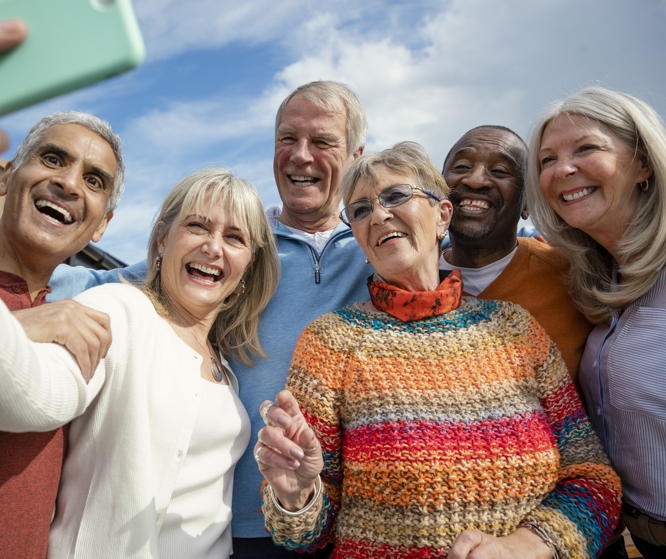
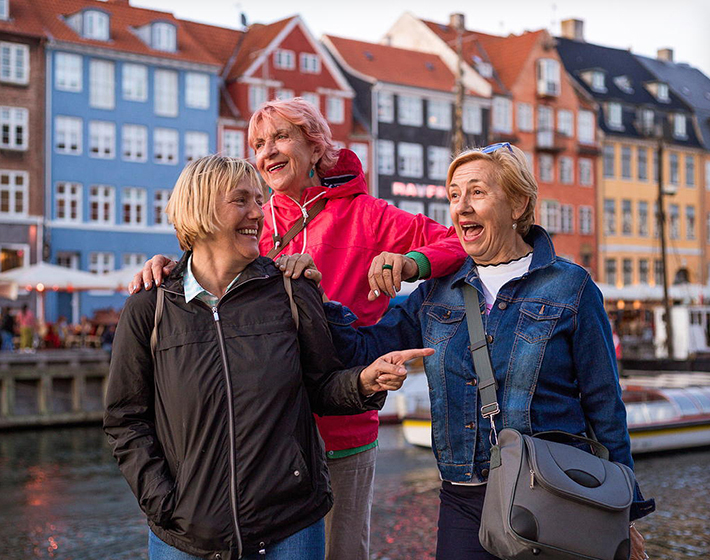
Whether they’re at a conference or opining on LinkedIn or USA Today, the senior living industry has spent the last 30 years preparing for the silver tsunami of Boomers. And now, here they are with the oldest Boomers turning 80 in 2026. By 2030, the youngest will be 66 years of age. So why are too many communities still marketing to this cohort like they did in 1997 to their parents? Let’s face it, Baby Boomers and their parents have little in common when they reach retirement. Not convinced? Let me break it down for you.
The New “Old” Boomers
Boomers are redefining aging. They refuse to be reduced to someone who is merely old. Cher, Bruce Springsteen, and Dolly Parton appear to be ageless. And, like these stars, Boomers continue to remake and defy the stereotypes built around aging. For example:
- 82% are active on at least one social media platform
- 60% financially support their adult children
- 40% rely solely on Social Security
- 15% of the entire workforce are Boomers
One Size Does NOT Fit All Baby Boomers
At 76 million strong, it puzzles me why marketing teams continue to use strategies developed for their parents’ generation. They fail to realize the Boomer generation is as different as Jane Fonda and John McCain. One protested the Vietnam War, going so far as making a very public visit to Hanoi in 1972. One was a Republican Senator and former POW who survived the “Hanoi Hilton.” Boomers celebrated rock ‘n roll while others pushed for LGBTQ+ rights. Tech geeks shaped computing and led the digital revolution. Women marched for sexual freedom and symbolically burned their bras and high heels. They watched the first man walk on the moon and the first president to resign in disgrace. Boomer presidents were as different as Bill Clinton and George W. Bush. And Barack Obama became the first Black president. Same generation; different goals.
So when it comes to senior living marketing strategies, why do we see communities continue to market to Boomers using the same strategies they used for the previous generation? Generic educational seminars, luncheon events thinly disguised as sales presentations, amenity-focused messages and one-size-fits-everyone prospect tours fail to resonate with consumers who have embraced personalization, longevity, and digital experiences.
Embrace Their Complexity
Today’s prospects not only demand a new approach to aging, they’re actively inventing it as they go. Which should not come as a surprise when you realize they’ve been reshaping their world all along. From civil rights to cultural agendas, they’ve been the leading instrument of change since they entered this world. Now it’s up to millennial marketers and Gen X to catch on, catch up, and adapt how to approach Boomers.
Today’s prospects expect organizations to understand their interests, motivations, and aspirations. They expect marketing messaging to be personalized. And as too many have noted, this generation controls $85 trillion in assets and a median net worth of $432,200. On the other hand, single Boomers make up 50% of homeless adults. They have a homeownership rate of almost 80%. And Baby Boomers accounted for 55% of all home sellers and 42% of home buyers. This is why we say you can’t generalize when you’re marketing to this audience. You must transform your approach and discern exactly who you need to target.
Experiences beat Amenities
Personalized experiences connect with today’s consumer. That’s basic Marketing 101 in today’s world. Check the 2025 Holleran National Study on Aging and you’ll see that this specific audience values a holistic lifestyle experience. They’re less concerned with floor plans and lists of amenities than previous generations. Seniors are taking a hard look at connection, engagement, and environment while they evaluate their financial situation and options. Trust, autonomy and the ability to make critical decisions throughout their life tip the balance when they choose whether to remain in their home or move to a community.
For decades, senior living professionals have debated what Baby Boomers would want as prospects. The waiting is over. Boomers are showing us exactly what they want, and what they don’t want if you’re listening. But most marketing teams continue to focus on swimming pools, inviting interiors, and dining rooms without walkers. Or they move in the opposite direction and showcase seniors skateboarding or dressed in outlandish ensembles mugging for the camera. Either way, they prove they don’t really know their audience. But there is a simple solution.
Modeled Data Delivers
Instead of relying on outdated census data, modeled data delivers an abundance of information so you can see your audience as individuals, not assets. Going beyond simple demographics (age, worth, and location), psychographics and behavioral insights give you a way to form a more coherent approach to moving from a cold opening to a warm and engaged move-in. Our modeled analysis provides marketing teams with insight into who is responding: planners, life-long learners, travelers, or wellness-focused consumers. Modeled data offers you the answer to Boomers’ critical question: “Do you understand who I am and what I want, or are you just trying to sell me the life you think I should take?”
Smart marketing teams already know the value of the right data to reach the right audience. Are you ready to become one of them? I can help. Just email me or give me a call. I’m ready to help you get to know this special generation in all their varied forms.